
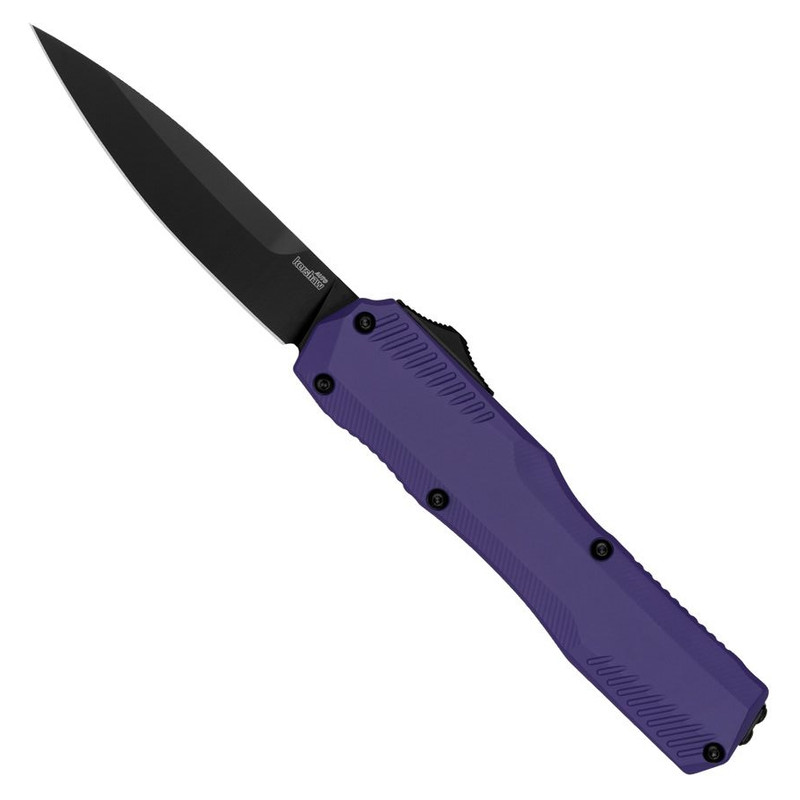
Are OTF Knives Reliable in Emergency Situations?
Posted by CT on Mar 17th 2025
Introduction
Imagine this: You’re in a car accident, trapped by a jammed seatbelt. Smoke fills the cabin, and panic sets in. Your hands fumble for something—anything—to cut yourself free. Or maybe you’re walking home late at night when a threat appears out of nowhere. Your pulse races, and you reach for your knife, knowing you only have a split second to react.
In moments like these, your knife isn’t just a tool; it’s your lifeline. But not just any knife will do. It needs to be fast, reliable, and ready the moment you need it. That’s where OTF (Out-the-Front) knives come in. With their push-button deployment and sleek, tactical design, they seem like the perfect choice for emergency situations. But do they really hold up when it counts?
Knives have been trusted in survival, self-defense, and life-or-death situations for centuries. Fixed-blade knives, known for their brute strength, have long been the go-to for military and survival professionals. Folding knives, with their compact design and sturdy build, have proven themselves as reliable everyday carry tools. OTF knives, on the other hand, offer something unique: an automatic blade that shoots straight out the front of the handle with a flick of a switch. They’re faster than a traditional folder, more compact than a fixed blade, and often praised for their tactical efficiency.
But speed isn’t everything. What happens when the internal springs wear out? What if the mechanism gets jammed with dirt and fails to deploy? What about blade strength—can an OTF handle heavy-duty cutting tasks, or will it buckle under pressure? These are the questions that matter when choosing a knife for emergency situations. A blade that looks cool in your pocket won’t help you if it fails the one time you actually need it.
So, are OTF knives truly reliable when the stakes are high? That’s exactly what we’re going to explore. We’ll break down how they perform in real-world emergencies, compare them to other knife types, and uncover potential failure points. We’ll also highlight the best OTF models for those who want one they can truly count on. By the end of this, you’ll know whether an OTF knife deserves a place in your emergency kit—or if you’d be better off with something else.
Because when an emergency hits, the last thing you want is to find out your knife isn’t up to the job.
What Makes a Knife Reliable in Emergency Situations?
When it comes to emergencies, a knife is more than just a tool—it’s a lifeline. Whether you’re cutting a seatbelt in a burning car, fending off an attacker, or slicing through rope in a survival scenario, the right knife can make all the difference. But not just any knife will do. It has to be fast, strong, and dependable, no matter the conditions.
So, what separates a reliable emergency knife from an everyday carry blade? The answer comes down to a few key factors: speed of deployment, locking strength, blade durability, and resistance to failure under stress. Let’s break each of these down.
Speed and Accessibility
In a high-stress situation, there’s no time to fumble with a slow-opening knife. When every second counts, the ability to deploy your blade quickly and with one hand is essential. This is where OTF knives have a clear advantage. Unlike folding knives that require manual opening or assisted-opening knives that need a flick of the wrist, an OTF knife fires straight out with the push of a button. No hesitation, no second step—just instant access to a sharp blade.
That speed can be critical in a fight-or-flight scenario. If your other hand is occupied—gripping a car door, holding onto an injured person, or bracing for impact—you need a knife that opens effortlessly. OTF knives shine in this category, making them a strong contender for emergency use.
Locking Mechanism Strength
A fast-deploying knife is only useful if the blade stays locked in place when it hits resistance. Weak or unreliable locking mechanisms can spell disaster in an emergency, leading to blade play, instability, or even accidental closure while cutting. A good emergency knife needs a rock-solid lockup that won’t fail under pressure.
This is one area where OTF knives can vary widely. High-end models have tight tolerances and well-engineered locks that keep the blade firmly in place. But cheaper OTF knives can suffer from blade wobble or weak locks, making them unreliable in high-stress situations.
In contrast, fixed-blade knives eliminate this issue entirely by having no moving parts. A well-built folding knife with a strong liner lock or frame lock can also hold up well. But OTF knives, particularly dual-action models, rely on internal spring tension to keep the blade extended—and if that mechanism weakens over time, lock strength can suffer.
Blade Strength and Durability
Emergencies aren’t always neat and predictable. A reliable knife should be able to cut through seatbelts, rope, heavy clothing, and other tough materials without chipping, bending, or dulling too quickly. The quality of the blade steel plays a major role here.
Higher-end OTF knives use premium steels like M390, S35VN, or D2, which offer superior edge retention and toughness. But lower-quality OTF knives often use softer steels that dull quickly or struggle against tough cutting tasks. Since OTF knives tend to have thinner blades than fixed blades, they’re more prone to bending under extreme force. If you’re in a situation where you need to pry or hack at a material, an OTF knife may not be the best tool for the job.
Resistance to Environmental Factors
Emergencies don’t always happen in ideal conditions. A reliable knife should work even if it’s wet, dirty, or exposed to extreme temperatures. This is another category where OTF knives can struggle. Their internal mechanism is more sensitive to dirt, lint, and moisture than a fixed blade or even a simple folding knife.
If an OTF knife gets clogged with debris, it can misfire, fail to lock fully, or jam entirely. Some high-end models, like those from Microtech or Guardian Tactical, have self-cleaning tracks and tight tolerances to minimize these issues. But cheaper OTF knives are much more prone to failure when exposed to sand, mud, or pocket lint.
If you’re relying on an OTF knife for emergencies, regular cleaning and maintenance are essential. Without it, you run the risk of carrying a knife that won’t work when you need it most.
Ease of Carry and Everyday Use
A good emergency knife is one that you actually carry every day. The most rugged, heavy-duty blade in the world won’t help you if it’s sitting at home in a drawer when disaster strikes.
OTF knives are popular for everyday carry (EDC) because they offer a great balance of speed, compactness, and ease of use. Unlike fixed blades, which require a sheath and can be bulky to carry, an OTF knife slips easily into a pocket and deploys instantly when needed.
However, they can be thicker and heavier than a comparable folding knife due to their internal mechanism. Some people prefer the slim profile of a frame-lock folder or a lightweight assisted-opening knife for everyday carry. It comes down to personal preference—if you’re comfortable carrying an OTF knife and maintaining it properly, it can be a solid emergency tool.
The Bottom Line
A reliable emergency knife must be fast, strong, and resistant to failure under stress. OTF knives excel in deployment speed and ease of use, making them a strong contender for emergency situations. However, their mechanical complexity, potential for blade play, and vulnerability to dirt and wear mean they require regular maintenance and a high-quality build to truly be dependable.
In the next section, we’ll dive deeper into how OTF knives perform under pressure, including real-world emergency scenarios and how they compare to other knife types in critical moments.
How Do OTF Knives Perform Under Pressure?
A knife might look great on paper, but the real test comes when it's put under stress, urgency, and real-world pressure. Emergency situations don’t wait for you to fumble with a slow-opening blade or deal with a mechanical failure. If an OTF knife is going to be a go-to emergency tool, it needs to deliver in the moments that matter most.
So how well do OTF knives actually perform when things go sideways? Let’s break it down.
Speed and One-Handed Deployment
One of the biggest advantages of an OTF knife is speed. Unlike a traditional folding knife, which requires two hands to open in many cases, or even an assisted-opening knife that still requires manual effort, an OTF knife deploys instantly with the push of a button.
This kind of deployment is a huge advantage in emergency situations, especially when:
- Your other hand is occupied—maybe you’re holding onto an injured person or bracing yourself.
- You’re in a stressful, high-adrenaline moment where fine motor skills suffer.
- Time is critical, and every second matters.
A good OTF knife removes the need for any extra steps. There’s no fumbling for a thumb stud, no worrying about whether a flipper tab will engage, and no worrying about whether a spring-assisted folder will catch properly. The blade fires straight out, instantly ready for use.
In high-stress situations, this kind of muscle memory simplicity makes OTF knives a solid choice for emergency carry. When panic sets in, you don’t want to think about opening your knife—you just want it to work.
Locking Mechanism and Blade Stability
Speed is one thing, but what happens after the blade is deployed? A knife is only as good as its lock-up—meaning how securely the blade stays in place once it’s out.
This is where OTF knives can be hit or miss depending on the model.
Most high-quality OTF knives feature a reliable internal locking system that holds the blade firmly in place after deployment. This means once the knife is open, you can count on it to stay open while cutting through seatbelts, rope, clothing, or other materials.
However, blade play is a common issue with OTF knives, especially in budget models. Unlike a fixed blade or even a well-built liner lock or frame lock, OTF knives rely on internal tracks and spring tension to hold the blade in place. In some cases, this results in slight wiggle or movement in the blade, which can make heavy-duty cutting feel less stable.
In an emergency, blade stability matters. The last thing you want is for the knife to feel loose or unreliable when cutting something tough. If you’re considering an OTF knife for emergency situations, investing in a high-end, well-built model is crucial—cheap, low-quality OTF knives often struggle with lockup strength.
Blade Strength and Cutting Power
Emergencies don’t always involve simple, clean cuts. Sometimes, a knife needs to handle extreme cutting tasks—like slicing through a thick seatbelt, prying open a stuck door, or hacking through rope and heavy fabric.
OTF knives, due to their thin blade profile, often struggle here compared to other knife types. While their blades are razor-sharp and precise, they typically aren’t built for brute-force cutting or prying.
For example:
- A fixed-blade knife can handle high-impact cutting, batoning, and prying without issue.
- A well-built folding knife with a thick blade stock can power through tough materials.
- An OTF knife, especially a budget model, may struggle with more demanding cutting tasks, as the blade thickness and locking mechanism aren’t designed for extreme force.
That doesn’t mean OTF knives are useless in emergencies—they’re just best suited for precise, controlled cutting rather than heavy-duty abuse. If you expect to be in a wilderness survival situation or doing high-impact work, a fixed-blade knife is the better choice. If you’re looking for something quick and efficient for urban emergencies, self-defense, or vehicle rescues, an OTF knife makes sense.
How Well Do OTF Knives Handle Dirt, Water, and Debris?
Emergencies don’t always happen in clean, dry, indoor conditions. A knife should work even when it’s wet, dirty, or exposed to dust and grime.
This is another area where OTF knives have a potential weakness. Because they rely on an internal sliding mechanism, they are far more susceptible to dirt, sand, lint, and moisture than a fixed blade or even a simple folding knife.
If an OTF knife gets clogged with pocket lint, sand, or dust, it can:
- Misfire or fail to fully deploy.
- Deploy slowly or sluggishly.
- Fail to retract properly.
Similarly, exposure to water can cause internal rust or corrosion, especially if the knife isn’t regularly maintained. Some high-end OTF knives have self-cleaning track systems that help mitigate this issue, but cheaper models are much more prone to mechanical failure when exposed to the elements.
If you plan to carry an OTF knife in situations where it could be exposed to dirt, dust, or moisture, regular cleaning and lubrication are absolutely necessary to keep it functioning reliably.
Durability Over Time: How Long Will an OTF Knife Last?
A great emergency knife isn’t just one that works once—it’s one that you can count on for years of reliable service.
OTF knives, especially high-end models, are built to withstand repeated use. But the internal springs and firing mechanism do wear down over time, especially if the knife is used frequently.
A well-maintained OTF knife should last years with proper care, but heavy daily use may lead to:
- Spring fatigue, causing weaker deployment over time.
- Track wear, leading to misalignment or sluggish blade action.
- Internal part wear, requiring occasional replacement or servicing.
This isn’t a major concern if you choose a quality knife and perform regular maintenance, but it’s something to keep in mind. OTF knives require more care than a fixed-blade knife or a simple folding knife, making them a higher-maintenance option for emergency preparedness.
The Verdict on OTF Knife Performance in Emergencies
So, how do OTF knives hold up when the pressure is on?
Where They Shine:
- Blazing-fast deployment—ideal for self-defense, quick rescue situations, and urban emergencies.
- One-handed operation—critical when the other hand is occupied.
- Compact and easy to carry—perfect for EDC without adding bulk.
Where They Struggle:
- Blade play in some models—less stable than a fixed or high-quality folding knife.
- Limited heavy-duty strength—not ideal for prying, batoning, or extreme cutting.
- Vulnerability to dirt and debris—requires regular cleaning to maintain reliability.
If you need a fast-access emergency knife for precise, quick cutting, an OTF knife is a strong choice—especially if you invest in a high-quality model. But if you’re looking for a rugged, abuse-ready survival tool, you may be better off with a fixed blade or a high-end folding knife.
Up next, we’ll compare OTF knives to other popular emergency knife types and see how they stack up when survival is on the line.
How Do OTF Knives Compare to Other Emergency Knives?
When choosing a knife for emergency situations, speed and reliability are top priorities—but they’re not the only factors to consider. A knife should also be strong enough to handle tough cutting tasks, resistant to wear and failure, and easy to maintain. OTF knives offer exceptional speed and convenience, but how do they stack up against other knife types commonly used in emergencies?
To get a clearer picture, let’s compare OTF knives to folding knives, fixed-blade knives, and assisted-opening knives—three of the most popular options for emergency carry.
OTF Knives vs. Folding Knives: Speed vs. Durability
Folding knives have been a staple of everyday carry (EDC) and emergency preparedness for decades. They are compact, easy to carry, and available in countless variations, from budget-friendly models to high-end tactical designs. But how do they compare to OTF knives when it comes to emergency performance?
Deployment Speed
OTF knives have a clear advantage in speed. A folding knife requires manual action—you need to either:
- Use a thumb stud or flipper tab to deploy the blade.
- Engage an assisted-opening mechanism (which still requires some effort).
This means that under high-stress conditions—where fine motor skills can be impaired—folding knives can be slower and more difficult to open than an OTF knife. With an OTF knife, deployment is as simple as pressing a button.
Locking Strength and Blade Stability
This is where folding knives have the edge.
- A well-built liner lock, frame lock, or axis lock in a folding knife provides rock-solid blade security.
- OTF knives, on the other hand, can suffer from blade play due to their internal track system.
While high-end OTF knives like the Microtech Ultratech or Guardian Tactical RECON-035 have tight tolerances and strong locks, many budget OTF knives feel less stable compared to a well-built frame lock or liner lock folder.
Durability and Hard Use
Folding knives are generally more robust than OTF knives when it comes to heavy-duty cutting tasks. They use thicker blade stock and are designed for firm, consistent lockup. Some high-end folders, like the Benchmade Griptilian or Spyderco Paramilitary 2, are built to handle years of abuse without failure.
OTF knives, in contrast, are not designed for extreme force. Their internal springs and deployment mechanism mean they aren’t as strong as a traditional folding knife when used for prying, batoning, or high-impact tasks.
Maintenance and Reliability
Here, folding knives have another advantage.
- A simple folding knife has fewer moving parts, meaning less can go wrong over time.
- An OTF knife requires regular cleaning and lubrication to prevent dirt or lint from clogging the firing mechanism.
If you’re someone who doesn’t want to deal with frequent maintenance, a high-quality folding knife might be the more reliable long-term choice.
Verdict: Which is Better for Emergencies?
- If speed and one-handed deployment are your top priority → OTF knives win.
- If stability, durability, and long-term reliability matter most → A well-built folding knife is the better option.
OTF Knives vs. Fixed-Blade Knives: Strength vs. Convenience
If you ask military personnel, survivalists, or first responders what kind of knife they trust in life-or-death situations, most will name a fixed-blade knife. These knives are known for their strength, durability, and complete reliability, making them a top choice for survival, self-defense, and rescue work. But how do they compare to OTF knives?
Deployment and Speed
Here’s where OTF knives dominate. Fixed-blade knives are always ready, but they require a sheath and an additional step to draw and deploy. In a high-stress emergency, pulling a fixed blade from a sheath takes more time than simply pressing a button on an OTF knife.
That said, fixed blades are not slow—they just require a different kind of training and muscle memory.
Blade Strength and Cutting Power
Fixed-blade knives crush OTF knives when it comes to strength and reliability. Because they have no moving parts, there’s zero risk of failure due to springs or internal mechanisms wearing out.
A high-quality fixed blade can:
- Handle extreme force without blade play.
- Pry, hammer, and chop without breaking.
- Stay strong under continuous hard use without needing maintenance.
OTF knives, on the other hand, have thinner blades and a weaker lock-up due to their internal firing mechanism. They are not designed for extreme use and will struggle with prying, batoning, or high-impact survival tasks.
Ease of Carry and Portability
This is where OTF knives make a strong case. A fixed-blade knife requires a sheath and takes up more space, whereas an OTF knife slides neatly into a pocket.
For everyday carry, an OTF knife is far more practical. But for long-term survival or heavy-duty tasks, a fixed blade is the superior tool.
Maintenance and Reliability
Fixed-blade knives require almost no maintenance aside from keeping the edge sharp. OTF knives, on the other hand, need regular cleaning, lubrication, and occasional servicing to stay functional.
Verdict: Which is Better for Emergencies?
- If maximum strength and durability are what you need → Fixed-blade knives win.
- If speed, portability, and everyday carry convenience are more important → OTF knives are the better option.
OTF Knives vs. Assisted-Opening Knives: Fast Deployment Showdown
Assisted-opening knives (like the Kershaw Blur or Benchmade Barrage) offer spring-assisted blade deployment, making them faster than traditional folders but slower than OTF knives.
Speed and Accessibility
- OTF knives are faster—pressing a button is quicker than flicking a thumb stud or flipper.
- Assisted-open knives are more reliable—no risk of misfire or deployment failure.
Durability and Strength
- Assisted-opening knives use a solid locking mechanism (frame lock, liner lock, or axis lock) for better stability than OTF knives.
- OTF knives have more moving parts, making them more prone to mechanical failure over time.
Maintenance and Reliability
- Assisted-open knives require minimal maintenance—just occasional cleaning and lubrication.
- OTF knives need frequent cleaning to prevent misfires or deployment issues.
Verdict: Which is Better for Emergencies?
- If you want the absolute fastest deployment → OTF knives win.
- If you want reliability with minimal maintenance → An assisted-opening knife is the better choice.
Final Thoughts: Where Do OTF Knives Fit in?
Each type of emergency knife has clear strengths and weaknesses. OTF knives offer unmatched speed and ease of deployment, but they require more maintenance and aren’t as durable as fixed blades or high-end folders.
If you need a knife that is:
✔ Fast to deploy
✔ Compact and easy to carry
✔ Ideal for quick, precise cutting tasks
Then an OTF knife is a great choice.
But if you need:
✔ Extreme strength for heavy-duty work → Go with a fixed blade.
✔ A balance of durability and portability → A quality folding knife is the best option.
✔ Something low-maintenance but still fast → Consider an assisted-opening knife.
Next, we’ll look at common failure points in OTF knives and what you can do to keep yours in top working condition.
Common Failure Points of OTF Knives in Emergencies
A knife is only as good as its worst moment—if it fails when you need it most, all its strengths mean nothing. OTF knives have some clear advantages, particularly their speed and ease of deployment, but they also come with mechanical complexities that can introduce failure points in critical situations.
When considering an OTF knife for emergency use, it’s important to understand where these knives can fail and, more importantly, how to prevent those failures. Let’s take a closer look at the most common weak points of OTF knives and what you can do to keep them in peak condition.
- Deployment Failures: When the Blade Won’t Fire
The single biggest advantage of an OTF knife is also its biggest risk factor—the internal mechanism. Unlike a folding knife, which simply pivots open, an OTF knife relies on a spring-loaded track system to push the blade out. If anything disrupts that system, the knife may:
- Misfire (blade only partially extends).
- Fail to deploy at all (button is pressed, but nothing happens).
- Deploy sluggishly, making it unreliable in a high-stress moment.
Causes of Deployment Failures
- Dirt, lint, and debris buildup – OTF knives are more prone to failure if dust, sand, or pocket lint gets inside the firing mechanism.
- Weak or worn-out springs – Over time, the internal springs may lose tension, leading to slower or inconsistent deployment.
- Blade misalignment – If an OTF knife is dropped or handled roughly, the internal track can shift slightly, affecting how smoothly the blade extends.
- Lack of lubrication – OTF mechanisms require periodic lubrication to function properly. Without it, friction can cause the blade to deploy slowly or incompletely.
How to Prevent It
- Regularly clean your OTF knife by blowing out dust and debris with compressed air.
- Lightly lubricate the internal mechanism with a dry lubricant (avoid heavy oils that attract dirt).
- Test deployment frequently to ensure smooth action—if the blade starts to hesitate, clean and lube immediately.
- Avoid using the knife in excessively dirty or sandy environments without cleaning afterward.
- Blade Play: A Wobbly Lockup
One of the biggest criticisms of OTF knives is their tendency to have slight blade play—meaning the blade may wiggle slightly when extended.
Why Does This Happen?
- OTF knives use a sliding mechanism rather than a fixed pivot point, which means they naturally have more movement than a folding knife with a frame lock.
- The internal track system must allow just enough clearance for the blade to deploy and retract smoothly, which can introduce minor blade movement.
- Budget OTF knives often have more noticeable blade play due to looser tolerances in manufacturing.
For everyday cutting tasks, a little blade play isn’t a major problem. But in an emergency situation, where precision cutting, prying, or hard use is needed, excessive blade movement can reduce effectiveness and reliability.
How to Prevent It
- Invest in a high-quality OTF knife from a trusted brand—companies like Microtech, Guardian Tactical, Benchmade, and Hogue design their knives with tighter tolerances.
- Avoid applying heavy lateral pressure on the blade (OTF knives are not meant for prying).
- Check reviews before purchasing—some OTF models have naturally tighter lock-up than others.
- Spring Wear and Mechanical Breakdown
OTF knives rely on internal springs to fire the blade out and pull it back in. Over time, these springs can weaken, break, or lose tension, leading to a knife that fires inconsistently or fails to retract properly.
Signs of Spring Fatigue
- The blade deploys slower than usual.
- The blade feels weaker when locking into place.
- The knife sometimes fails to fully retract after pressing the button.
This issue is most common in cheap or heavily used OTF knives. High-quality OTFs have stronger springs that last longer, but even the best models will eventually experience some wear and tear.
How to Prevent It
- Don’t “flick” the blade repeatedly for no reason—excessive opening and closing wears out the springs faster.
- Store the knife with the blade retracted—keeping the spring under constant tension (extended) for long periods can weaken it.
- If the spring starts feeling weak, send it in for servicing—many premium brands offer repairs and tune-ups.
- Jamming Due to Environmental Exposure
A fixed-blade knife is nearly immune to dirt, sand, and water, but OTF knives are highly sensitive to debris entering the internal mechanism. This can cause grit buildup, leading to:
- Rough or sluggish deployment.
- Failure to fully extend or retract.
- Permanent internal damage if dirt wears down the metal parts.
This problem is especially common in outdoor environments where dust, sand, and mud are present. If you plan to carry an OTF knife in these conditions, you must be prepared to maintain it regularly.
How to Prevent It
- If your knife gets dirty, clean it immediately before the debris has a chance to settle inside.
- Use compressed air or a dry brush to clear out dust and grit from the handle and firing mechanism.
- Consider using a fixed blade or folding knife in extreme outdoor conditions, as they handle dirt and moisture better.
- Poor Edge Retention and Blade Durability
OTF knives are built for quick, controlled cutting, not for heavy-duty survival tasks. If you try to use an OTF for batoning, chopping, or prying, you’ll likely damage the blade, dull the edge, or even break it.
Why This Happens
- OTF knives typically have thinner blade stock than fixed-blade or heavy-duty folding knives.
- Many OTF models prioritize a slim, tactical profile over brute strength.
- Some budget OTFs use lower-grade steels that dull quickly with heavy use.
How to Prevent It
- Choose an OTF knife with high-quality blade steel like M390, S35VN, or D2 for better edge retention.
- Don’t use an OTF knife for prying, hammering, or extreme cutting tasks—they aren’t built for that kind of abuse.
- Carry a fixed blade as a backup if you expect to be in survival situations.
The Bottom Line: Can These Issues Be Avoided?
Yes—but only if you maintain your knife properly and invest in a high-quality model.
OTF knives are not inherently unreliable, but they do have more failure points than a simple folding knife or fixed blade. If you choose an OTF for emergency situations, you need to commit to regular maintenance—cleaning out debris, lubricating the mechanism, and checking for signs of wear.
High-end OTF knives from brands like Microtech, Benchmade, and Guardian Tactical are designed to minimize these failure risks, but even the best models require care and upkeep.
Next, we’ll take a look at the best OTF knives for emergency situations, breaking down which models offer the best balance of speed, reliability, and durability.
Best OTF Knives for Emergency Situations
Not all OTF knives are built the same. If you’re relying on one in an emergency, you need a knife that deploys fast, locks up tight, and holds up under pressure. A cheap, poorly made OTF knife might look cool, but when the time comes to cut a seatbelt, defend yourself, or handle a high-stress situation, it could fail exactly when you need it most.
So, how do you choose the right one? The best OTF knives for emergencies have strong internal mechanisms, premium blade steel, and rock-solid construction. They should also be made by reputable brands that back their products with warranties and solid customer service.
Let’s break down some of the top contenders.
- Microtech Ultratech – The Gold Standard of OTF Knives
If you’ve spent any time researching OTF knives, you’ve probably heard of Microtech. The Ultratech is one of their flagship models and is widely regarded as one of the most reliable OTF knives ever made.
Why It’s Great for Emergencies:
✔ Superb build quality – Microtech is known for its precision engineering. The Ultratech has tight tolerances and a solid lock-up, reducing blade play.
✔ Smooth, reliable deployment – The dual-action mechanism is snappy and consistent, even after years of use.
✔ Premium blade steel options – Microtech offers M390, Elmax, and other high-end steels that retain their edge far longer than cheaper OTF knives.
✔ Lightweight but strong – The aluminum handle keeps it easy to carry without sacrificing durability.
Potential Downsides:
✖ Pricey – The Ultratech isn’t cheap, but you’re paying for quality.
✖ Aggressive firing mechanism – The strong spring tension means it requires a firm push to deploy, which might be difficult for those with weaker grip strength.
✅ Best For: Those who want a high-quality OTF knife that will last for years of hard use.
- Benchmade Infidel – Tactical, Tough, and Battle-Tested
The Benchmade Infidel is another top-tier OTF knife designed with military and law enforcement professionals in mind. It has a beefier handle, a wider blade, and a deep-carry clip for secure carry.
Why It’s Great for Emergencies:
✔ Outstanding durability – Benchmade is known for their lifelong warranty and service, ensuring this knife will last.
✔ Smooth deployment and retraction – The firing button is positioned on the face of the handle, making it easy to use.
✔ Thicker blade for stronger cuts – The Infidel’s blade stock is slightly thicker than most OTFs, giving it more cutting power.
Potential Downsides:
✖ Expensive – One of the priciest OTF knives, but built to last.
✖ Large handle – It’s bulkier than the Ultratech, which may be an issue for EDC.
✅ Best For: Those who want a larger, tactical-grade OTF knife built for extreme situations.
- Guardian Tactical RECON-035 – The Smoothest OTF Knife
One of the biggest complaints about OTF knives is that they can be hard to deploy due to stiff switches. The Guardian Tactical RECON-035 fixes that issue with one of the smoothest deployment mechanisms on the market.
Why It’s Great for Emergencies:
✔ Extremely smooth deployment – The firing switch glides effortlessly, making it easier to operate under stress.
✔ Tight lock-up with minimal blade play – Guardian Tactical’s design reduces the amount of blade wiggle common in OTF knives.
✔ Premium materials – Uses top-tier blade steels like Elmax and CPM-154, ensuring great edge retention.
✔ Compact yet strong – Smaller than the Infidel but still rugged and dependable.
Potential Downsides:
✖ Not as well-known as Microtech or Benchmade, but quickly gaining a strong reputation.
✖ The smoother action makes it easier to fire unintentionally if you’re not careful.
✅ Best For: Those who want an OTF knife that’s easy to operate with minimal resistance.
- Hogue Counterstrike – A Strong New Contender
Hogue has been making some of the best tactical knives in recent years, and the Counterstrike OTF is one of their newest offerings. Designed with input from military and law enforcement professionals, it brings serious competition to the big brands.
Why It’s Great for Emergencies:
✔ Exceptional lock-up and durability – Hogue’s precision machining makes for an extremely solid OTF knife with minimal blade play.
✔ Comfortable handle design – Ergonomic and easy to grip, even under stress.
✔ Tough blade materials – Comes in CPM-S30V steel, which holds an edge exceptionally well.
Potential Downsides:
✖ Still a newer model – Not as battle-tested as Microtech or Benchmade OTFs.
✖ Heavier than some competitors – Built for strength, but at the cost of added weight.
✅ Best For: Those who want a strong alternative to Microtech and Benchmade at a competitive price.
- SOS OTF Knife – A Budget-Friendly Option That Works
Not everyone wants to spend hundreds of dollars on an OTF knife, especially if they just need something for occasional emergency use. The SOS OTF Knife is an affordable, functional option that delivers solid performance for the price.
Why It’s Great for Emergencies:
✔ Budget-friendly – Costs significantly less than premium OTF knives.
✔ Reliable dual-action mechanism – Fires smoothly and retracts easily.
✔ Good edge retention for the price – Uses D2 steel, which is decent for emergency use.
Potential Downsides:
✖ More blade play than premium OTFs – Not as tight as Microtech or Guardian Tactical models.
✖ Requires more frequent maintenance – Lower-end components mean it needs regular cleaning and lubrication.
✖ Not built for extreme conditions – Won’t handle heavy-duty abuse as well as high-end models.
✅ Best For: Those who want an OTF knife without breaking the bank—a solid backup emergency tool.
Which OTF Knife Is Right for You?
Choosing the best OTF knife for emergencies depends on your specific needs.
✔ If you want the absolute best: → Microtech Ultratech
✔ If you need a tough, tactical-grade OTF: → Benchmade Infidel
✔ If you want the smoothest action: → Guardian Tactical RECON-035
✔ If you want a strong, well-built alternative: → Hogue Counterstrike
✔ If you’re on a budget but still want reliability: → SOS OTF Knife
The key takeaway? Not all OTF knives are created equal. If you’re relying on one in an emergency, invest in quality. Cheap OTF knives may look cool, but when the moment comes where your knife is the difference between success and failure, you’ll be glad you chose one that won’t let you down.
Next, we’ll look at practical real-world applications—how OTF knives actually perform in self-defense, vehicle rescues, survival situations, and medical emergencies.
Practical Real-World Uses for OTF Knives in Emergencies
An emergency knife isn’t just something you carry—it’s something you trust to perform when every second counts. Whether you’re dealing with a self-defense situation, a car accident, or a survival scenario, an OTF knife’s instant deployment and sharp blade can be a game-changer. But how do these knives hold up when put to the test in real-world emergencies?
Let’s break it down and see where OTF knives excel, where they struggle, and how they compare to other knives in critical situations.
- OTF Knives for Self-Defense: Fast Deployment, But Are They Enough?
One of the biggest reasons people carry an OTF knife is self-defense. The ability to deploy a blade instantly with one hand makes them a strong option for close-quarters encounters.
Why OTF Knives Work Well for Self-Defense
✔ Instant Blade Access: Unlike a folding knife, there’s no need to fumble with a thumb stud or flipper tab—press the button, and the blade is ready.
✔ One-Handed Use: In a confrontation, you might need to use your other hand for defense, creating distance, or blocking an attack. An OTF knife allows you to react with minimal effort.
✔ Compact & Easy to Carry: Unlike a fixed blade, which requires a sheath, an OTF knife stays hidden in your pocket until needed.
Where OTF Knives Fall Short in Self-Defense
✖ Blade Length Limitations: Many OTF knives have shorter blades (3 to 3.5 inches), which might not be ideal in a defensive situation. Fixed blades offer longer reach and more cutting power.
✖ Potential Mechanical Failures: If the internal mechanism jams at the wrong time, your knife becomes useless. A well-maintained OTF minimizes this risk, but it’s still a factor to consider.
✖ Less Structural Strength: If your opponent grabs your knife, an OTF’s sliding blade mechanism is weaker than a fixed blade’s full tang construction.
Final Verdict for Self-Defense
An OTF knife is a great option for rapid deployment and easy carry, but it’s not the ultimate self-defense tool. If self-defense is your main concern, a well-built fixed blade or a strong folding knife with a fast-opening mechanism may be a more reliable option.
- OTF Knives in Vehicle Emergencies: Cutting Seatbelts & Breaking Glass
A vehicle accident is one of the most common emergency situations where a knife could save your life. If you’re trapped in a burning car or underwater, you need a knife that can cut through a jammed seatbelt and help break a window if necessary.
How OTF Knives Perform in Vehicle Emergencies
✔ Quick Deployment: You won’t waste time opening a folding knife when every second counts.
✔ Sharp Blade: Most quality OTF knives use razor-sharp steel that slices through seatbelts with ease.
✔ Compact for Glove Box or Pocket Carry: An OTF fits comfortably in your car’s center console or clipped inside your pocket, making it accessible in a crash.
Where OTF Knives Struggle in Vehicle Emergencies
✖ Not All OTF Knives Have Glass Breakers: Some models lack a built-in glass breaker tip, making it harder to break a car window in an emergency.
✖ Dirt & Debris Can Impact Performance: If your OTF knife gets clogged with dust or pocket lint, it might misfire when you need it most.
✖ Limited Leverage for Heavy Cutting: A fixed blade or rescue knife with a serrated edge will cut seatbelts faster than a smooth-edge OTF.
Final Verdict for Vehicle Emergencies
An OTF knife is better than having no knife at all, but for optimal vehicle safety, consider keeping a dedicated rescue knife with a glass breaker and seatbelt cutter in your car. That said, a well-maintained, high-quality OTF knife can still be an effective backup tool.
- OTF Knives in Outdoor Survival Situations
When it comes to camping, hiking, or survival scenarios, a knife is one of the most important tools you can carry. But is an OTF knife the best choice for survival situations?
How OTF Knives Perform in the Outdoors
✔ Easy to Carry: Lightweight and compact, an OTF is easier to carry than a bulky survival knife.
✔ Good for Precision Cutting: If you need to cut paracord, prepare food, or whittle wood, an OTF does the job well.
✔ One-Handed Access: If you’re injured or need to hold onto something, an OTF knife lets you deploy a blade without using both hands.
Where OTF Knives Struggle in Survival Situations
✖ Not Ideal for Heavy-Duty Tasks: OTF knives have thinner blades and are not designed for batoning, chopping, or prying.
✖ More Vulnerable to Dirt & Water: If you’re in a muddy or wet environment, an OTF knife’s mechanism can get clogged, leading to failure.
✖ Limited Cutting Power: A fixed-blade survival knife is far more durable and versatile for cutting firewood, making shelter, or skinning game.
Final Verdict for Outdoor Survival
OTF knives are not the best choice for outdoor survival. They can handle light tasks, but for real survival situations, a sturdy fixed-blade knife is the way to go. If you do carry an OTF for outdoor use, make sure you keep it clean and avoid using it for heavy-duty work.
- OTF Knives for First Aid & Medical Emergencies
A sharp knife can be a life-saving tool in medical situations—whether you need to cut bandages, remove clothing from an injury, or fashion makeshift medical tools.
How OTF Knives Help in Medical Emergencies
✔ Instant Access for First Responders: EMTs and paramedics often need a sharp, quick-opening knife to cut clothing, bandages, or restraints.
✔ Compact & Easy to Carry: A small, well-made OTF knife fits easily into a medical bag or pocket.
✔ Sharp for Clean Cuts: A quality OTF knife with razor-sharp steel ensures clean, precise cuts.
Where OTF Knives Struggle in Medical Emergencies
✖ Not All OTFs Have Serrated Blades: A partially serrated blade is better for cutting bandages, rope, or tough materials. Many OTF knives only come with a plain edge.
✖ Risk of Deployment Failure: If the spring mechanism fails, the knife is useless in a high-pressure medical emergency.
✖ Less Control for Delicate Cuts: A scalpel or trauma shears provide better precision for medical use than an OTF knife.
Final Verdict for Medical Emergencies
An OTF knife can be a useful tool for first aid, but it’s not a replacement for proper medical equipment. If you carry one for medical use, choose a partially serrated blade and keep it sharp and well-maintained.
The Bottom Line: Are OTF Knives Reliable in Real Emergencies?
OTF knives excel in urban emergencies where speed and convenience are key. They work well for self-defense, vehicle extractions, and quick cutting tasks, but they are not built for survival, heavy-duty work, or extreme conditions.
✔ Best for: Fast deployment, self-defense, emergency cutting, and EDC carry.
✖ Not ideal for: Hard use, prying, outdoor survival, or extreme environments.
If you plan to rely on an OTF knife in emergencies, choose a high-quality model, keep it clean, and understand its limitations.
Next, we’ll wrap up everything we’ve covered and help you decide whether an OTF knife is the right emergency tool for you.
Final Verdict: Are OTF Knives Reliable for Emergencies?
So, after breaking down every aspect of OTF knives—their strengths, weaknesses, real-world applications, and how they compare to other emergency knives—the question remains: Can you trust an OTF knife in an emergency?
The answer isn’t a simple yes or no. It depends on what kind of emergency you’re preparing for, how much you’re willing to invest in quality, and whether you’re committed to proper maintenance. Let’s summarize the key takeaways and help you decide if an OTF knife is the right tool for your needs.
Where OTF Knives Shine in Emergencies
OTF knives offer a combination of speed, convenience, and compact carry that makes them ideal for certain emergency scenarios. They work best in urban environments, self-defense situations, and vehicle-related emergencies, where fast access to a blade can make all the difference.
Key Strengths of OTF Knives in Emergencies:
✔ Lightning-Fast Deployment – No other knife deploys as quickly with such minimal effort. In an emergency, every second counts.
✔ One-Handed Operation – Essential in situations where your other hand is occupied or injured.
✔ Compact and Easy to Carry – Unlike a bulky fixed blade, an OTF knife slips into your pocket and is ready when you need it.
✔ Excellent for Quick Cutting Tasks – Seatbelts, rope, plastic ties, or fabric can all be cut cleanly with a sharp OTF blade.
✔ Tactical Edge – Many professionals, including military personnel and law enforcement officers, trust high-end OTF knives for their fast access and defensive capability.
If you’re looking for an EDC (Everyday Carry) emergency knife that gives you instant access to a blade, an OTF knife is one of the best options available.
Where OTF Knives Fall Short in Emergencies
While OTF knives are great for fast access, they aren’t built for extreme durability or heavy-duty cutting tasks. If you’re in a situation where brute strength, prolonged use, or extreme environmental exposure is a factor, an OTF knife might not be the best choice.
Key Weaknesses of OTF Knives in Emergencies:
✖ Blade Play Issues – Some OTF knives, especially budget models, have slight blade movement that can make hard-use cutting feel unstable.
✖ Not Built for Heavy-Duty Work – Prying, batoning, or extended cutting can damage the internal mechanism or break the blade.
✖ More Prone to Mechanical Failure – Dirt, dust, pocket lint, or wear over time can cause deployment failures if not properly maintained.
✖ Spring Wear and Tear – The internal mechanism relies on springs, which can weaken over time if the knife is frequently used.
✖ Not Ideal for Outdoor Survival – A fixed blade or rugged folding knife is much better suited for wilderness survival, bushcraft, or extreme conditions.
If your emergency needs include survival, hard-use cutting, or exposure to extreme conditions, then a fixed-blade knife or a high-quality folding knife is a better choice.
Is an OTF Knife the Right Emergency Tool for You?
Deciding whether an OTF knife is the best emergency knife for you comes down to your specific needs. Let’s look at a few key scenarios:
- Do you need a knife for self-defense or urban emergencies? → Yes, an OTF knife is a great option.
- Do you need a knife for survival, outdoor use, or heavy-duty cutting? → No, a fixed blade is a better choice.
- Do you need a knife for quick access in a vehicle emergency? → Yes, but only if it has a strong blade and is well-maintained.
- Do you want an emergency knife that requires minimal maintenance? → No, OTF knives require regular cleaning and lubrication.
If speed and convenience are your top priorities, an OTF knife excels in those categories. But if strength and reliability in extreme conditions matter more to you, a fixed-blade knife or a well-built folding knife is the better tool.
The Best OTF Knife for Emergency Situations
If you’re set on using an OTF knife for emergency situations, choosing a high-quality model is critical. A cheap OTF knife may look the part, but it will fail when you need it most.
Here’s a quick recommendation based on different needs:
✅ Best Overall OTF for Emergencies → Microtech Ultratech (Outstanding reliability and build quality)
✅ Best Tactical OTF → Benchmade Infidel (Trusted by military professionals)
✅ Best Smooth-Action OTF → Guardian Tactical RECON-035 (Easiest deployment)
✅ Best Heavy-Duty OTF → Hogue Counterstrike (Strongest lock-up and blade durability)
✅ Best Budget OTF → SOS OTF Knife (Affordable but functional for emergency use)
If you invest in a well-made, reputable OTF knife and take care of it properly, it can absolutely be a reliable emergency tool.
Final Thoughts: Are OTF Knives Reliable for Emergencies?
Yes—but only under the right conditions.
A high-quality OTF knife is one of the fastest, most convenient emergency knives you can carry, making it a great option for self-defense, quick cutting tasks, and urban emergencies. But it’s not indestructible, and it’s not the best tool for heavy-duty survival or extreme environments.
If you’re willing to invest in a well-built model and commit to proper maintenance, an OTF knife can absolutely be a dependable emergency tool. But if you need something more rugged and abuse-ready, consider carrying a fixed blade or a high-end folding knife as a backup.
At the end of the day, the best emergency knife is the one that works when you need it most—so choose wisely, maintain it well, and always be prepared.