
Best Butterfly Knives for Beginners: Top Picks & Buying Guide
Posted by CT on Mar 18th 2025
Introduction
Butterfly knives, also known as balisongs, have gained popularity among knife enthusiasts and flipping hobbyists for their unique design, smooth handling, and trick potential. However, for beginners, choosing the right butterfly knife can make a huge difference in learning speed, safety, and overall experience.
A beginner-friendly balisong should be well-balanced, durable, and easy to control to help new flippers develop proper technique and confidence. Whether you’re looking for a trainer knife to practice safely or a live-blade balisong for long-term progression, selecting the right model is essential to building a solid foundation in butterfly knife flipping.
This guide will cover:
- What to look for in a beginner-friendly butterfly knife (trainer vs. live blade, weight, balance, materials).
- Top picks for beginner butterfly knives, including trainers, budget-friendly options, and high-quality balisongs.
- Essential buying tips and safety recommendations to help new flippers get started.
If you’re just starting out and want a reliable, smooth-flipping butterfly knife, this guide will help you find the best balisong to match your skill level and goals.
What to Look for in a Beginner Butterfly Knife
Choosing the right butterfly knife for beginners is essential for developing proper technique, improving control, and minimizing frustration while learning tricks. A poorly balanced or cheaply made balisong can hinder progress, making it difficult to execute even basic maneuvers. Below are the key factors to consider when selecting a beginner-friendly butterfly knife.
1. Trainer vs. Live Blade: Which One to Start With?
Beginners should always start with a trainer butterfly knife before using a live blade. Trainers allow new flippers to practice safely, reducing the risk of injury while mastering basic movements.
Trainer Balisong (No Live Blade)
✔ Safe for practice – No sharp edge, reducing the risk of cuts.
✔ Great for learning basic tricks – Helps develop muscle memory without danger.
✔ Often lighter and easier to control – Ideal for beginners building confidence.
Live Blade Butterfly Knife
✔ Best for advanced beginners ready to transition from a trainer.
✔ Requires careful handling and proper technique to avoid injuries.
✔ More balanced flipping experience, replicating real-use conditions.
Recommendation: If you’re a first-time flipper, start with a trainer balisong before moving on to a live blade once you have mastered basic handling skills.
2. Blade Material: Durability & Maintenance
The blade material affects the durability, edge retention, and ease of maintenance.
- Stainless Steel (440C, 154CM, CPM-S30V) – Resists rust, holds an edge well, and is easy to maintain.
- D2 Steel – Offers better hardness and edge retention but requires regular oiling to prevent corrosion.
- Trainer Blades – Typically made from aluminum or stainless steel to simulate the feel of a real balisong.
Recommendation: For trainers, stainless steel or aluminum blades are ideal. For live-blade balisongs, stainless steel (440C or better) provides a good balance of durability and maintenance ease.
3. Handle Construction: Balance & Grip
The handle material significantly affects how a butterfly knife feels in the hand, its durability, and ease of flipping.
- Aluminum: Lightweight, durable, and commonly used in beginner balisongs.
- G-10: A textured, grippy material that offers good control.
- Stainless Steel: Heavier, durable, but can be harder to flip for beginners.
- Titanium: Premium material, lightweight, and strong but more expensive.
Recommendation: Aluminum and G-10 handles are the best choices for beginners because they offer lightweight control and a secure grip.
4. Pivot System: Smooth Flipping Action
A smooth pivot system makes learning tricks easier and more enjoyable. The two main types are:
- Bushings: Provide smoother, more controlled flipping with less handle play.
- Bearings: Offer ultra-fast action but may require more maintenance over time.
Recommendation: Bushings are preferred for beginners because they provide a balance of smoothness and control, while bearings may be too fast for those still learning basic movements.
5. Weight & Balance: Finding the Right Feel
A beginner-friendly butterfly knife should have a well-balanced weight distribution to ensure easy flipping without being too light or heavy.
- Lightweight balisongs (3-4 oz): Easier for beginners to control but may lack momentum for certain tricks.
- Medium-weight balisongs (4-5.5 oz): Best for most beginners—provides stability and enough weight for smooth flipping.
- Heavy balisongs (6 oz+): Harder to flip quickly but can help build strength and control.
Recommendation: A 4-5.5 oz butterfly knife is ideal for beginners, offering a good mix of control and momentum.
6. Latch Type: Spring Latch vs. Latchless Design
- Spring Latch: Keeps the knife closed when not in use; can sometimes get in the way during tricks.
- Latchless Design: No latch means no interference while flipping, often preferred by trick flippers.
Recommendation: A latchless balisong is best for beginners focused on flipping, while a spring latch can be useful for those who want to carry the knife securely.
Final Thoughts on Choosing a Beginner Butterfly Knife
When selecting your first butterfly knife, look for a well-balanced, durable, and smooth-flipping model that allows you to focus on technique rather than struggling with poor mechanics.
✅ Start with a trainer knife to build skills safely.
✅ Choose aluminum or G-10 handles for durability and control.
✅ Look for a smooth pivot system (bushings preferred).
✅ Find a well-balanced balisong in the 4-5.5 oz weight range.
The next section will cover the best beginner-friendly butterfly knives, including top trainers, budget options, and live-blade picks.
Best Butterfly Knives for Beginners: Top Picks
Choosing the right beginner-friendly butterfly knife can make learning easier, safer, and more enjoyable. Below are top-rated balisongs for beginners, including trainer models, budget-friendly options, and live-blade choices.
Best Trainer Butterfly Knives (No Live Blade)
For absolute beginners, a trainer butterfly knife is the safest way to practice flipping without the risk of cuts. These trainers replicate the weight, balance, and flipping action of a real balisong without a sharp edge.
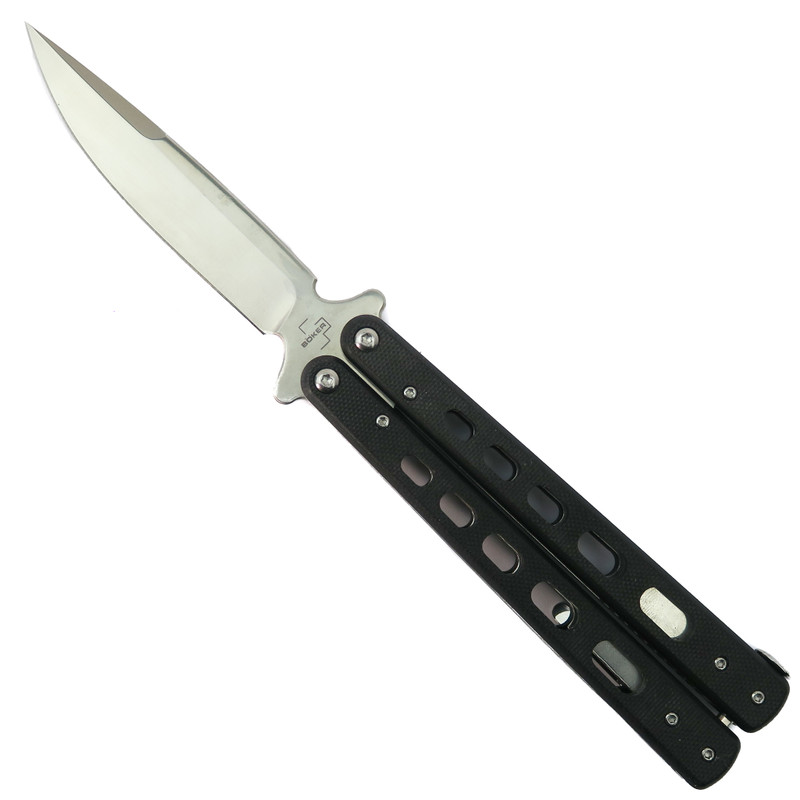
1. Boker Plus Balisong Trainer – Best Overall Trainer
✔ Weight: ~5.4 oz
✔ Handle Material: Stainless steel
✔ Why It’s Great: Well-balanced, durable, and offers smooth flipping action.
✔ Ideal For: Beginners who want a trainer with a realistic feel.
2. Squid Industries Squiddy – Best Lightweight Trainer
✔ Weight: ~2.6 oz
✔ Handle Material: Polymer (lightweight plastic)
✔ Why It’s Great: Super light, durable, and safe for flipping anywhere.
✔ Ideal For: Beginners who want a low-risk trainer to develop muscle memory.
3. Benchmade 85 Trainer – Best Premium Trainer
✔ Weight: ~5.3 oz
✔ Handle Material: Titanium
✔ Why It’s Great: High-end, ultra-smooth flipping experience.
✔ Ideal For: Serious beginners who want a trainer that mimics pro balisongs.
Best Live-Blade Butterfly Knives for Beginners
Once you’ve built confidence with a trainer, transitioning to a live blade requires a well-balanced, smooth-flipping knife that’s not overly aggressive. These knives are beginner-friendly, offering controlled flipping action while still being sharp.
4. Kershaw Lucha – Best Live-Blade for Beginners
✔ Blade Length: 4.6"
✔ Weight: ~5.9 oz
✔ Blade Steel: 14C28N stainless steel
✔ Why It’s Great: Well-balanced, easy to flip, and smooth pivots.
✔ Ideal For: Beginners looking for a reliable first live-blade balisong.
5. BRS Barebones – Best for Learning Advanced Flipping
✔ Blade Length: 4.5"
✔ Weight: ~5.3 oz
✔ Blade Steel: 154CM stainless steel
✔ Why It’s Great: Sturdy, fast, and built for flipping progression.
✔ Ideal For: Beginners ready to train on a high-performance live blade.
Which Butterfly Knife is Best for You?
|
Category |
Best Pick |
Why It’s Great |
|
Best Overall Trainer |
Boker Plus Balisong Trainer |
Durable, realistic flipping experience |
|
Best Live Blade for Beginners |
Kershaw Lucha |
Well-balanced, smooth pivots, beginner-friendly |
|
Best Premium Live Blade |
BRS Barebones |
Sturdy, high-performance for flipping progression |
|
|
|
|
Choosing the right butterfly knife depends on your skill level, budget, and flipping goals. If you’re just starting out, a trainer knife is the best option. If you’re ready for a live blade, go for a well-balanced, beginner-friendly balisong with smooth pivots and a comfortable handle.
The next section will cover how to choose the best beginner butterfly knife, including buying tips and what to avoid.
How to Choose the Right Butterfly Knife as a Beginner
Selecting the right beginner-friendly butterfly knife is essential for developing proper flipping skills and avoiding frustration. A well-balanced, high-quality balisong can make learning smoother, while a poorly designed knife can hinder progress. Here’s what you need to know when choosing your first butterfly knife.
1. Start with a Trainer Before Moving to a Live Blade
A trainer balisong (dull blade) is the safest way to build muscle memory and confidence without the risk of injury.
✅ Trainers allow you to learn tricks safely before using a sharp blade.
✅ Many trainers mimic live-blade weight and balance, so the transition is easier.
✅ Flipping a live blade too early can lead to injuries and bad habits.
When to Switch to a Live Blade:
- Once you can perform basic tricks consistently (e.g., basic rollovers, chaplins, and twirls).
- When you have full control over the knife’s momentum and grip.
2. Choose a Knife with a Lightweight but Sturdy Handle
The handle material and weight significantly impact how the knife flips.
Best Handle Materials for Beginners:
- Aluminum – Lightweight, durable, and widely used in beginner-friendly balisongs.
- G-10 – Offers great grip and control, making flipping easier.
- Stainless Steel – Heavier, which can help with control but may be harder for beginners.
? Avoid cheap plastic or overly heavy handles, as they can feel unbalanced and slow down progress.
3. Look for Smooth Pivot Action
A good pivot system ensures the knife flips smoothly and without resistance.
Best Pivot Types:
- Bushings – Provide consistent flipping action with less handle play.
- Bearings – Offer ultra-fast, frictionless movement but may require more maintenance.
For beginners, bushings are often preferred because they provide a balance of smoothness and control, making it easier to develop flipping techniques.
4. Find a Well-Balanced Balisong
Butterfly knives with even weight distribution allow for better control and fluid movement when flipping.
Ideal Weight for Beginners:
- 4.5–5.5 oz – The perfect balance between stability and ease of flipping.
- Under 4 oz – May feel too light, making it harder to control.
- Over 6 oz – Can be too heavy, slowing down flipping speed.
? Avoid unbalanced knives, as they can make learning tricks frustrating and difficult.
5. Consider the Latch Type
Butterfly knives come with different latch styles, affecting flipping comfort.
- Spring Latch: Keeps the knife securely closed, but can get in the way during tricks.
- Latchless: No latch means no interference—great for flipping.
- Magnetic Latch: Provides security while staying out of the way when open.
For pure flipping, a latchless knife is ideal, but if you want to carry your knife closed, consider a spring or magnetic latch.
6. Stick to Reputable Brands
Investing in a quality beginner butterfly knife ensures durability, smooth flipping, and long-term use.
Best Beginner Balisong Brands:
- Boker – Great for affordable trainers.
- Squid Industries – High-quality, beginner-friendly trainers.
- Kershaw – Excellent live-blade options for new flippers.
- BRS (Blade Runners Systems) – Reliable, smooth-flipping balisongs.
- CJRB & Nabalis – Budget-friendly but well-balanced starter knives.
? Avoid cheap, no-name balisongs with poor balance and stiff pivots.
What to Avoid When Buying a Beginner Butterfly Knife
? Avoid overly heavy balisongs, as they can be difficult to control.
? Don’t buy low-quality, unbalanced knives—they make learning harder.
? Skip live blades if you’re a complete beginner—they increase the risk of injury.
? Be wary of decorative or "display-only" balisongs—they’re not designed for flipping.
Final Buying Tips for Beginners
✔ Start with a high-quality trainer before transitioning to a live blade.
✔ Choose a knife with lightweight aluminum or G-10 handles for easy flipping.
✔ Look for a balisong with smooth pivots (preferably bushings).
✔ Opt for a well-balanced knife in the 4.5–5.5 oz range for better control.
✔ Stick to reputable brands to ensure durability and smooth flipping action.
Choosing the right butterfly knife will make learning tricks easier, safer, and more enjoyable.
The next section will cover essential safety tips for beginner balisong users, ensuring you build skills without unnecessary risks.
Butterfly Knife Safety Tips for Beginners
Before diving into flipping tricks, safety should be your top priority. Butterfly knives require dexterity, control, and awareness, and mishandling can lead to injuries. Following these essential safety tips will help you build confidence and avoid accidents while learning.
1. Use a Trainer Knife First
A trainer butterfly knife (dull blade) is the safest way to develop muscle memory and flipping skills without the risk of cuts.
✅ Trainers replicate the feel of live-blade balisongs while keeping you safe.
✅ Beginners should master basic tricks (e.g., rollovers, chaplins) on a trainer before switching to a sharp blade.
✅ Switching too early to a live blade increases the risk of deep cuts and bad habits.
? Avoid starting with a sharp balisong—flipping a live blade before mastering control can lead to serious injuries.
2. Flip Over Soft Surfaces
Practicing on hard floors (tile, concrete, or wood) can damage your knife or cause painful drops on your hands.
✔ Best practice areas:
- Carpeted floors
- Grass or soft outdoor surfaces
- A towel or yoga mat placed on a table
? Avoid flipping over hard, rough surfaces—it can damage your knife’s edge and handles if dropped.
3. Keep Your Hands Dry and Free of Sweat
Sweaty or oily hands reduce grip and increase the chance of dropping your knife.
✔ Wash and dry your hands before flipping.
✔ Use chalk or grip-enhancing powder if your hands tend to sweat.
✔ Choose a balisong with textured handles (G-10 or knurled aluminum) for extra grip.
? Avoid flipping with wet or greasy hands—slipping mid-trick can cause serious accidents.
4. Start with Slow, Controlled Movements
Many beginners rush tricks too quickly before mastering basic movements, leading to blade misalignment, bad landings, and injuries.
✔ Practice tricks slowly until you can execute them with control.
✔ Break down each trick into small, repeatable motions.
✔ Increase speed only when you have full control over the knife’s motion.
? Avoid rushing through tricks—precision is more important than speed.
5. Always Check Your Knife’s Screws and Pivots
Regular flipping can loosen pivot screws and cause the handles to wobble, making tricks harder to control.
✔ Tighten pivot screws regularly with a Torx driver (T6 or T8).
✔ Apply a drop of thread locker (Loctite Blue 242) to keep screws secure.
✔ Ensure the latch (if applicable) isn’t interfering with flipping motion.
? Never flip with a loose balisong—unsecured screws can lead to unexpected failures.
6. Respect the Blade When Using a Live Balisong
Once you transition to a live blade, you must treat the knife with full awareness and caution.
✔ Always check which side is the “safe handle” (the side without the cutting edge).
✔ Use a light grip when flipping—gripping too tightly can cause overcorrection and mistakes.
✔ If you feel yourself losing control of the trick, let the knife drop.
? Avoid catching a falling live blade—it’s better to let it drop than risk slicing your fingers.
7. Learn and Practice in a Controlled Environment
Flipping in public spaces or around others can be dangerous and may draw unwanted attention.
✔ Practice in a safe, private space (home, backyard, or a designated training area).
✔ Make sure there’s no one nearby before attempting tricks with a live blade.
? Avoid flipping near crowds or in tight spaces where you could accidentally injure someone.
8. Have a First Aid Kit Nearby
Even with precautions, mistakes happen—being prepared is essential.
✔ Keep bandages, disinfectant, and medical tape nearby in case of minor cuts.
✔ For deep cuts, apply pressure and seek medical attention if necessary.
? Never ignore deep cuts—clean and treat any wounds immediately.
Final Thoughts on Butterfly Knife Safety for Beginners
✅ Use a trainer knife first before transitioning to a live blade.
✅ Flip over soft surfaces to prevent damage and injuries.
✅ Start slow and focus on control before increasing speed.
✅ Regularly check your knife’s screws and pivots.
✅ Respect the live blade—never catch a falling balisong.
By following these safety tips, you can build your flipping skills confidently and reduce the risk of injuries.
The next section will summarize everything you need to know about beginner butterfly knives and help you make the best decision for your flipping journey.
Conclusion: Finding the Best Butterfly Knife for Beginners
Learning to flip a butterfly knife (balisong) is an exciting skill, but choosing the right knife can make all the difference in your progress. A beginner-friendly balisong should be well-balanced, durable, and smooth-flipping to help develop confidence and control. Whether you start with a trainer or a live blade, investing in a high-quality butterfly knife will make learning easier and safer.
Key Takeaways for Choosing a Beginner Butterfly Knife
✔ Start with a trainer knife – Avoid injuries while mastering the basics.
✔ Choose a lightweight, well-balanced handle – Aluminum or G-10 is best for control.
✔ Look for smooth pivot action – Bushings provide better flipping mechanics for beginners.
✔ Find the right weight – 4.5–5.5 oz is ideal for stability and control.
✔ Stick to reputable brands – Avoid cheap, low-quality balisongs that hinder learning.
✔ Always practice safely – Flip over soft surfaces, keep hands dry, and start slow.
Top Beginner Butterfly Knife Recommendations
|
Category |
Best Pick |
Why It’s Great |
|
Best Overall Trainer |
Boker Plus Balisong Trainer |
Realistic feel, durable, and smooth flipping |
|
Best Live Blade for Beginners |
Kershaw Lucha |
Well-balanced, smooth pivots, beginner-friendly |
|
Best Premium Live Blade |
BRS Barebones |
Sturdy, high-performance for flipping progression |
|
|
|
|
Final Advice for Beginner Flippers
- Start with a trainer before moving to a live blade.
- Prioritize control over speed when learning tricks.
- Check and maintain your knife regularly for smooth operation.
- Follow proper safety precautions to prevent injuries.
By choosing the right butterfly knife and practicing with patience and consistency, you’ll develop better flipping skills, smoother technique, and long-term confidence in handling a balisong.
Now that you know what to look for in a beginner-friendly butterfly knife, which model do you think suits your style best?